Regency era underwear (or lack thereof)

I’ve been spending an enjoyable time investigating breeches (for research purposes, honest) and learned that neither gentlemen nor ladies tended to wear underwear during the Regency period. It sounds rather uncomfortable to me, but it does make for smoother sex scenes!

I’ve also been reading a fascinating book on the history of duelling (Pistols at Dawn by Richard Hopton) and was surprised to find that ladies engaged in duels. Some ladies, in fact, fought gentlemen in duels and won.

One of the most widely reported duels between female protagonists (though denied by one of the alleged participants and not mentioned by Hopton) was in 1892 between Princess Pauline von Metternich and Countess Anastasia Kielmannsegg. They are said to have fought one another with rapiers over flower arrangements. I can’t quite imagine what insult one could offer a flower arrangement that would be unforgivable, but that’s probably why I’ve never called anyone out.

They fought with rapiers.  The medical attendant, Baroness Medinska, who had a degree in medicine, had seen the horrific infections caused by war wounds and insisted the principals fight topless. It is still in dispute as to who won (though thankfully not disputed enough to cause further duels). The princess received a cut to the nose and the countess an injury to her arm.

I can see why a story with such potential to titillate spread far and wide, even if it isn’t true. And perhaps it is.

Duel Metternich–Kielmansegg by Paul Balluriau

The bear necessities

320px-Black_bear_cub

Apologies for that terrible, terrible title.

This is the latest in my occasional series of fascinating (yes, really!) facts series… It’s a long story, but I ended up reading about bears earlier today and stumbled upon some interesting facts. Be warned, I haven’t had the time to verify any of these facts, so treat them with the caution you would anything else on the internet.

  • The bear ancestor is an offshoot of the ancient Canidae family of dogs, wolves, foxes, and coyotes.
  • Bears are very smart and have been known to roll rocks into bear traps to set off the trap and eat the bait in safety.
  • In 2004, a black bear was found unconscious in a campground in Seattle, Washington. It had broken into a cooler and used its claws and teeth to open dozens of beer cans. Although it sampled other types of beer, it chose to drink all the cans of only one type of beer. After its drinking binge, the bear passed out.
  • A swimming polar bear can jump 8 ft. (2.4 m) out of the water.
  • Polar bears have the largest home ranges of any bear. One polar bear can hunt and live in an area as big as Maine.
  • Bears can run up to 40 miles per hour, fast enough to catch a running horse.
  • Unlike many mammals, bears can see in color.
  • Bears can see almost as well as humans, and they can hear a little better. But they can smell much better. In fact, a bear’s sense of smell is around 100 times greater than a human’s. Polar bears can track down an odor from 20 miles (32 km) away. They can smell a dead seal under 3 feet of solid ice.

And no, I have no plans to write about bears any time soon. Which of course means it’s almost certain my next book will involve them somehow…

My burgeoning love affair with wolves (from a very safe distance)

Wolf pups

Before I started reading about wolves for my Strength of the Pack series, my knowledge of them was gleaned entirely from multiple readings of White Fang as a child (and by multiple readings, I mean somewhere in the region of thirty. I loved that book).

Having spent far longer of late than I should reading about wolves’ behaviour, communication, body language and pack structure, not to mention watching videos of adult wolves playing with one another and with little fuzzy cubs, I am fast falling in love with these fascinating, complicated and toothy creatures.

One or two things I stumbled across in my reading I found particularly interesting, though to anyone with a knowledge of wolves already, they are undoubtedly very old news.

  • Wolves can hear as far as six miles away in the forest and ten miles in the open.
  • They have practically no body heat loss through their fur (snow will not melt on a wolf’s coat).
  • How dominant wolves sometimes adopt a submissive role when playing with members of the pack.
  • The extent to which all adult members of the pack play with the cubs. Seriously. Go to YouTube and look. You’ll lose hours of your life, but it’ll put a smile on your face.

Black Wolves (aka the perils of research)

OR11_odfw

I’ve just been reading about a recent study which discovered that black wolves’ coat colouring derives from the historical mating of wild grey wolves with black dogs.

I found that to be interesting in a fairly abstract way, but that’s all. Until I read this quote from Robert Wayne, one of the academics involves in the study:

“It [the black coat] must have adaptive value that we don’t yet understand. It could be camouflage, or strengthening the immune system to combat pathogens, or it could reflect a preference to mate with individuals of a different coat color.”

So a certain dark-coloured wolf (yes, Karl, I’m looking at you) is now bugging me about his preferences when it comes to a mate. Damn it. So much for my carefully planned story.

Back to the drawing board. Or the blank word processing document….

Release day for A Gilded Cage

I’m not sure where the summer is going, but somehow the release day for A Gilded Cage is already here!

Set once more in 1790s Venice, with its licentious Carnevale and gorgeous clothes and masks, the book is a sequel to Carnevale (though either book may be read as a stand-alone). A Gilded Cage is available from Siren-BookStrand here, with a 10% discount until 28th August.

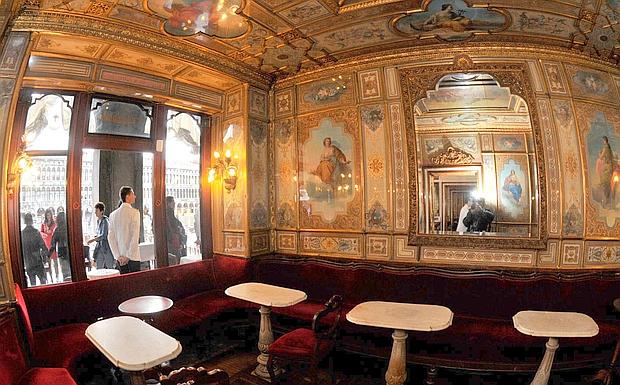
The coffee house to which Perry takes Gilbert is based on Caffe Florian, partly because it was in the right place at the right time, partly because I longed to use a place frequented by such men as Casanova and Byron, but mainly because I couldn’t resist tormenting Gilbert by having ladies present in a coffee shop. The horror! 

Venice – gay history

A couple of months ago, I wrote a post for the excellent series about gay history on the Manlove Authors website. With Carnevale, the first in my Venetian series, being published tomorrow, it occurs to me it might be a good idea to link to the post which gives some background about the history of gay sex and the law in Venice.

While I’m afraid the write-up I’ve done is a little dry, I hope people find the facts as interesting as I did when doing the research. I also love the picture that accompanies the article. My heroes don’t wear anything quite so elaborate (which has nothing to do with the fact they wear precisely nothing for much of the book!), but the pictured masks and hats are beautiful.

A new book, and gondoliers.

While research into eighteenth century Venice was fun for its own sake, I’m delighted that Siren BookStrand have accepted the novella for which it was undertaken. Titled Carnevale, it’s due to be published on July 30th, and follows the fortunes of Peregrine (Perry) Sinclair, an English gentleman visiting Venice as part of his Grand Tour.

I’m in the midst of the sequel to Carnevale at the moment. Continued reading around the subject of Venice led me to John Addington Symonds’ memoirs. They’re interesting in their own right, but I was particularly struck by his love affair with Angelo Fusato, a gondolier. Symonds was fascinated by Angelo from the moment he first laid eyes on him:

The image of the marvellous being I had seen for those few minutes on the Lido burned itself into my brain and kept me waking all the next night. I did not even know his name; but I knew where his master lived. In the morning I rose from my bed unrefreshed, haunted by the vision which seemed to grow in definiteness and to coruscate with phosphorescent fire. A trifle which occurred that day made me feel that my fate could not be resisted, and also allowed me to suspect that the man himself was not unapproachable. Another night of storm and longing followed. I kept wrestling with the anguish of unutterable things, in the deep darkness of the valley of vain desire — soothing my smarting sense of the impossible with idle pictures of what it would be to share the life of this superb being in some lawful and simple fashion.

In these waking dreams I was at one time a woman whom he loved, at another a companion in his trade — always somebody and something utterly different from myself; and as each distracting fancy faded in the void of fact and desert of reality, I writhed in the clutches of chimaera, thirsted before the tempting phantasmagoria of Maya. My good sense rebelled, and told me that I was morally a fool and legally a criminal. But the love of the impossible rises victorious after each fall given it by sober sense.

I would love to know what trifle occurred that made Symonds think Angelo might not be unapproachable! The following day, Symonds learned Angelo’s name and arranged to meet him. Symonds expressed his surprise at Angelos’ willingness to do so, for he was not then aware that gondoliers were accustomed to selling their sexual services. And they retired to Symonds’ bed together:

I am not dreaming. He was surely here
And sat beside me on this hard low bed;
For we had wine before us, and I said —
"Take gold: 'twill furnish forth some better cheer".
He was all clothed in white; a gondolier;
White trousers, white straw hat upon his head,
A cream-white shirt loose-buttoned, a silk thread
Slung with a charm about his throat so clear.
Yes, he was here. Our four hands, laughing, made
Brief havoc of his belt, shirt, trousers, shoes:
 Till, mother-naked, white as lilies, laid
There on the counterpane, he bade me use
Even as I willed his body. But Love forbade —
 Love cried, "Less than Love's best thou shalt refuse!"

I have wanted for some time to write the love story of two of the secondary characters in Carnevale, a Venetian nobleman and his gondolier. Having read this, and also about the shenanigans of Lord Byron’s “muscular young gondolier”, I think that wish is fast becoming a necessity.

The rabbit holes of research

One of my favourite parts of writing is research, because I never know where it’s going to take me. In the last two months, I’ve gone from reading up on the choke settings on a V8 engine to watching the volleyball scene from Top Gun—that was really and truly in the name of research—and reading about prostitution in Renaissance Florence.

Fun facts I’ve discovered when researching Venice for my current work in progress:

  • In the fifteenth century, city authorities in Florence became so alarmed by the predilections shared by so many of their young men that they built municipal brothels for female prostitutes specifically to lure young men away from homosexual acts.
  • In the fourteenth century, a young Turkish acrobat is said to have walked along a rope from a boat moored in front of San Marco piazza all the way to the belfry of the church belltower. This feat was commemorated in later years by others who emulated his feat, their ascents and descents often, though not always, assisted by ropes and winches. One year, a man managed this feat seated on a horse. I still can’t get my head around (a) how, and (b) what the poor horse thought of it.
  • Because of carnivals and other festivals, it was possible to go about Venice in disguise for more than six months of each year.
  • Venice was so jealous of its trade secrets that its glass blowers were forbidden from talking to outsiders (so just how is my English hero going to get his glass sex toy made?).
  • Lord Byron took on William Fletcher as a valet after seeing him ploughing a field (because obviously that was a really good way of determining his likely valeting skills). Fletcher’s later duties included rubbing Byron down after exercise.

I’d love to hear what interesting facts others have come across, either in research or when reading.